
From Midas to Gyges
how gold sought validation from a stone

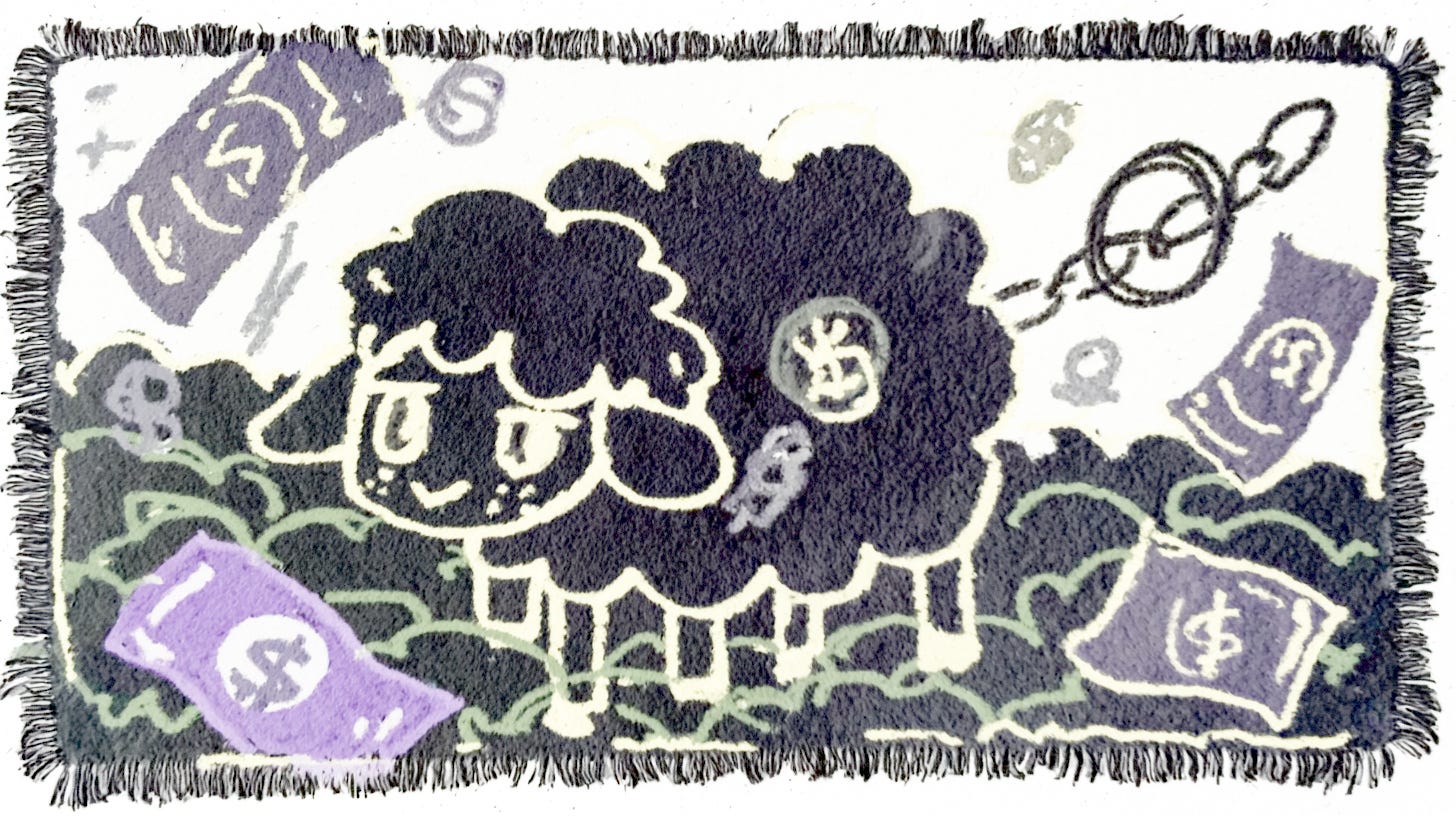
So there’s this mountain in Turkey. mount Tmolus. and two rivers come off it (the Pactolus and the Hermus) and they flow really slowly across this flat coastal plain, and as they go they’re just. Casually carrying gold dust down from the mountain. The rivers are literally full of tiny grains of gold mixed in with the silt. For thousands of years.
The way ancient people collected the gold? Sheepskins. The grease in the wool would trap the gold particles, and when the skin was full they’d dry it on a branch and then just. throw it in a fire. burn away the sheep stuff, gold blobs left in the ashes.
that might be where the golden fleece myth comes from. Jason and the argonauts. You know, the quest. Possibly just a forty-niner (B.C. of course) panning with a greasy sheep skin.
ANYWAY. So they’d melt the gold blobs into big blocks and use those as money, which sounds fine until you realize the blocks were enormous and heavy and basically only kings and armies used them. like you couldn’t buy bread with a forty-pound ingot of metal. the economy was basically Venmo but only between nation-states.
and then THEN some random (nameless!!) guy panning for gold in the pactolus river picks up a flat black stone. a piece of schist. and he rubs gold on it. and the gold leaves a colored streak on the stone:
pure gold = yellow streak.
gold mixed with silver = white.
gold mixed with copper = red.
he just invented quality control. by accident. with a rock.
this thing — the touchstone (YES that’s where the word comes from!!!) — meant that for the first time ever you could look at a piece of gold and KNOW how pure it was. any random person could check. which meant the king could stamp coins and people would actually trust they were worth what he said, because anyone could verify it with the funny little black rock.
and from that one discovery you get standardized coins. the Lydian stater. then fractions of coins. then other cities making their own money. then monetary unions between cities. then the athenian empire accepting the same currency across the whole eastern mediterranean. modern economics basically starts with a guy rubbing metal on a rock in a river in turkey.
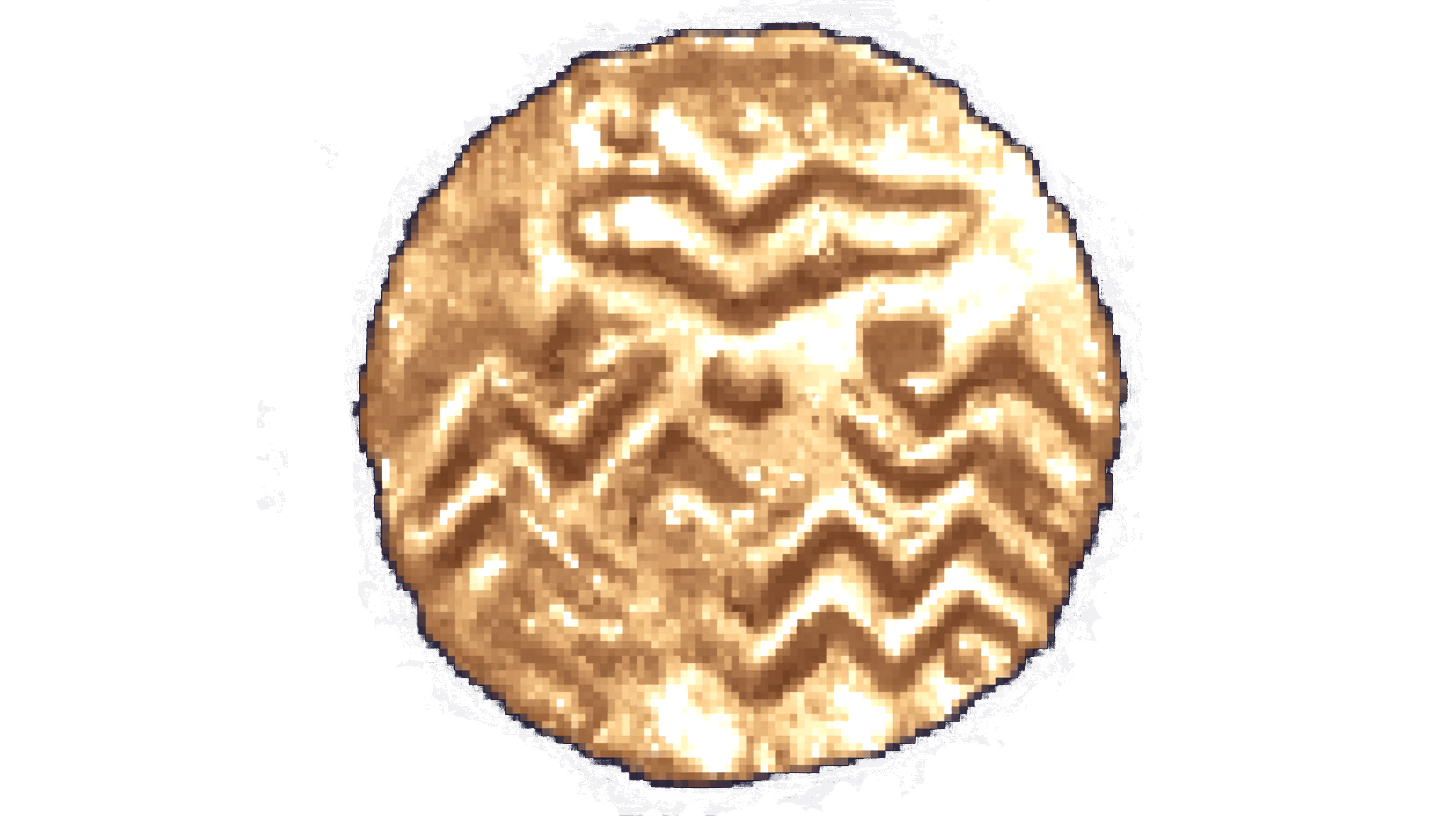
the part that gets me is how the coins changed politics too. suddenly the government’s mark was on every transaction. every time you bought something you were holding a tiny piece of state authority in your hand. money defined where a government’s power reached. the coin WAS the border. petty thieves who clipped away at them did not just crop a tyrant’s face. they eroded the frontiers themselves.
oh and bonus round: Sweden once tried to make copper coins and because copper was worth 1/100th of silver, one single large coin weighed FORTY-THREE POUNDS. they had to reorganize the entire national transportation system around moving money. it was physically impossible to steal because no one could carry it. You had to be stronger than a carpenter to be a financier — that is, until the first banknote in Europe was invented by the Bank of Sweden.
another thing: from the river Pactolus where they panned for gold, the word pactole in french is still slang for a boatload of money.
I feel heavier since you stopped, more touchy.
Minnow, Chapter 3